

Comparative analysis of butyl tape and silicone gel
Butyl tape and silicone sealant (usually referred to as silicone sealant) are two products with completely different characteristics and overlapping application scenarios, but also have significant differences. It cannot be directly said who is better than whom, only who is more suitable for a specific purpose.
Simply put:
◉ Butyl tape is more like a physical barrier, relying on its high viscosity and plasticity to fill gaps and stick objects.
◉ Silicone is more like a chemical adhesive/sealant, forming a strong chemical bond with the substrate surface through curing, and has excellent weather resistance.
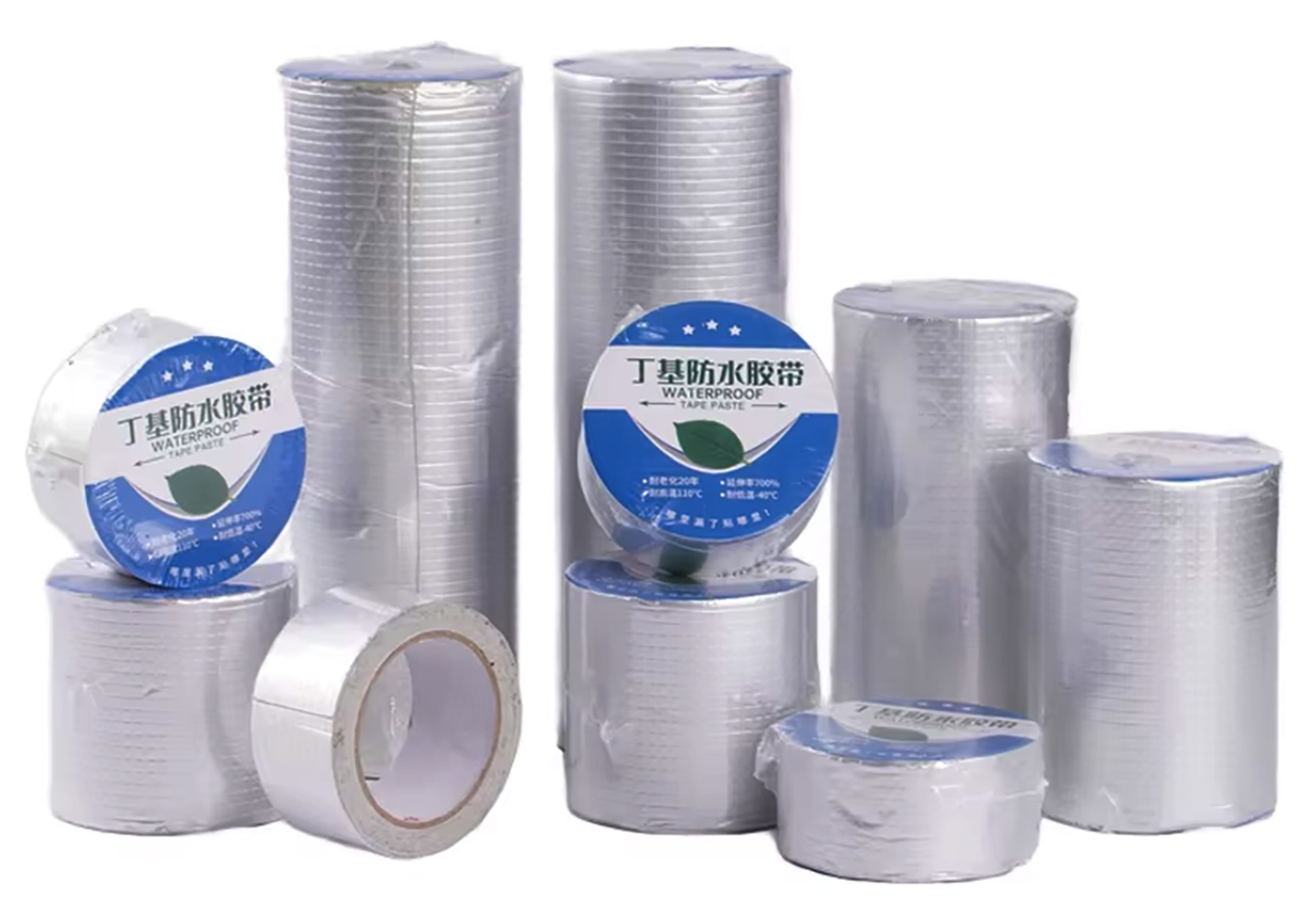
Comparison dimension table
| Feature | Butyl Tape | Silicone Sealant |
| Form | Tape like, pre formed | Paste like, requiring glue gun construction |
| Curing Method | Not curing, permanently maintaining viscosity | Curing and forming after exposure to air |
| Main advantage | Instant sealing, convenient construction, excellent internal waterproofing and airtightness | Excellent weather resistance (UV resistant), good elasticity, high bonding strength, and mold resistance |
| Main Disadvantages | Not resistant to ultraviolet radiation, inelastic, poor surface compatibility (prone to oil leakage) | Curing time required, construction skills required, difficult to remove, incompatible with certain plastics |
| Applicable scenarios | Concealed works: waterproofing inside the roof, embedding of door and window frames, sealing of metal joints | Exposure engineering: outdoor joint filling, bathroom and kitchen sealing, glass bonding, aquarium |
| Core difference | Physical sealing, filled with adhesive | Chemical bonding, forming an elastomer after curing |
How to choose? See your specific needs:
When choosing butyl tape:
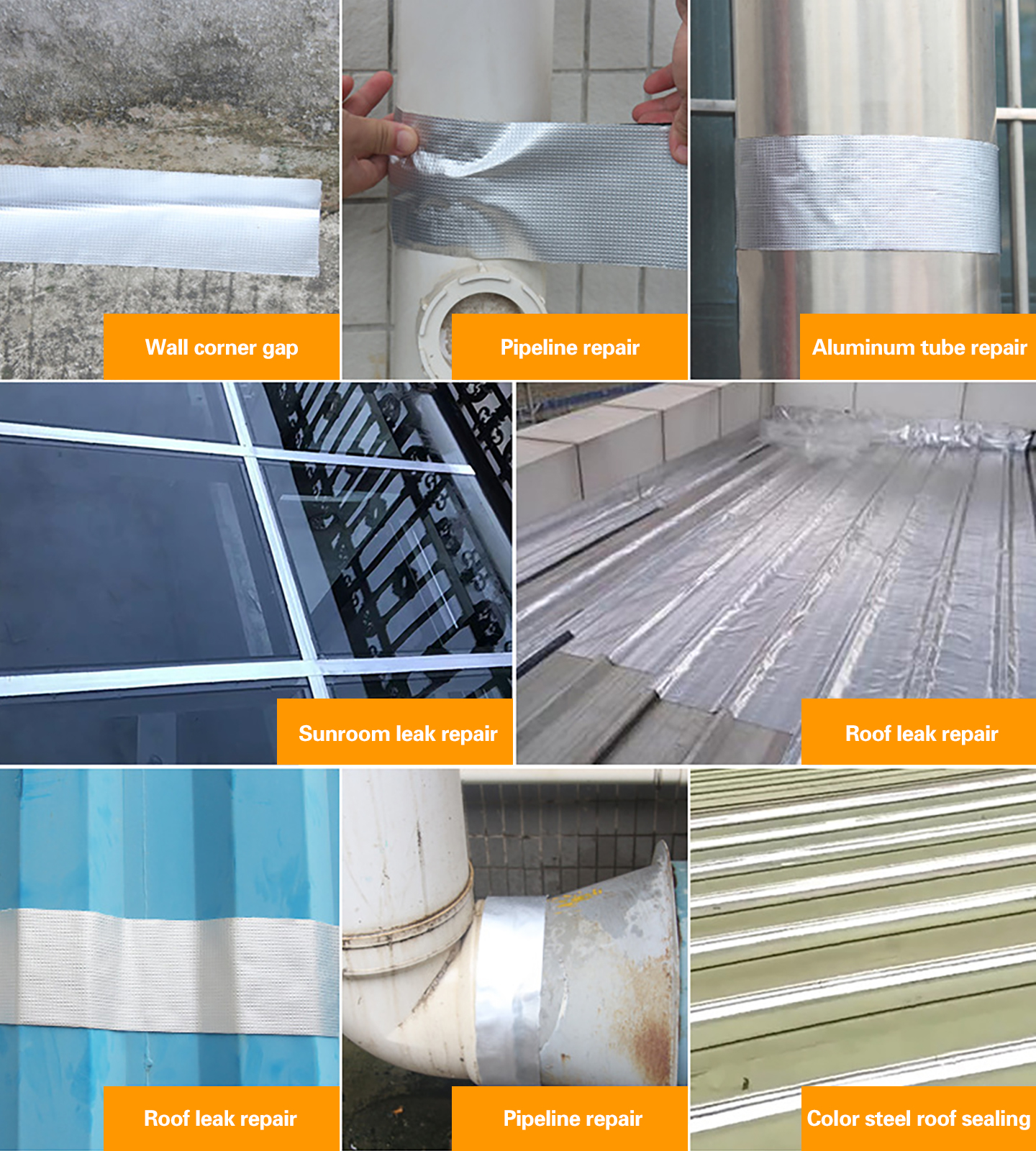
◉ Immediate sealing and fixation are required: for example, installing outdoor canopies, temporarily repairing leaking points, and immediately applying them to waterproof.
◉ Construction requirements are simple and fast: DIY by yourself, don't want to get everywhere, hope it's clean and convenient.
◉ Applied in concealed locations: for example, when installing roof panels, it serves as an inner waterproof seal and an outer covering layer, without direct contact with ultraviolet rays.
◉ Scenarios that require extremely high airtightness.
When choosing silicone:
◉ Long term exposure to sunlight and wind and rain, such as filling joints on balconies and windows, requires the use of silicone with excellent weather resistance.
◉ The joint needs to withstand significant thermal expansion and contraction: for example, the joint between glass and metal frame, the elasticity of silicone can continuously adapt to deformation.
◉ High strength structural bonding is required, such as bonding mirrors, fish tanks, or places that need to bear a certain weight.
◉ Frequent exposure to water or humid environments such as bathrooms, kitchens, sinks, etc., anti mold silicone is the preferred choice.
Conclusion
Butyl tape and silicone are not substitutes, but complementary. In many advanced construction projects, it is even used in combination.
So, back to your question: Is butyl tape better than silicone?
Yes, in terms of construction convenience and instant sealing.
Silicone has better long-term weather resistance, elastic strength, and durability.
Our company not only produces Butyl Rubber Tape , but also Acrylic Foam Tape,Anti Slip Tape,Reflective Tape,Glow In Dark Tape,Pavement Marking Tape,Aluminum Foil Tapes, etc,Looking forward to working with you.