

How to choose industrial anti slip tape
The selection of industrial anti slip tape is mainly based on the specific usage environment, pedestrian flow, and functional requirements, to match the key properties of the tape such as material, roughness, and adhesion. It is a comprehensive assessment related to safety and compliance.
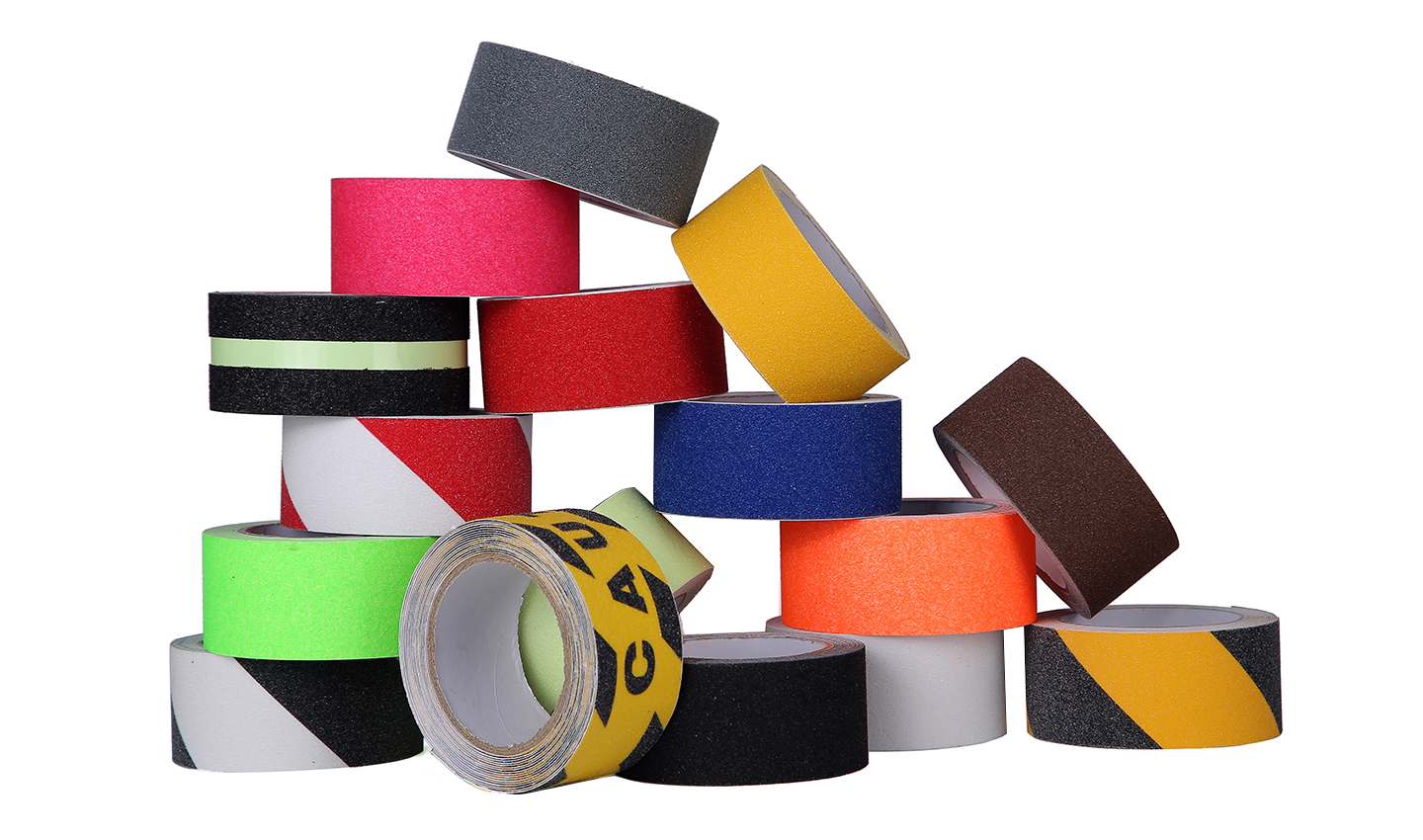
Step 1: Clarify your specific needs
Before making a selection, it is important to clarify the following questions to make the selection more targeted:
• Where to paste it? Ground, stairs, ramps, equipment or rollers?
• What is the surface material? Concrete, metal, wood, ceramic tiles, or plastic? Do you need to stick it on uneven surfaces?
• What are the environmental conditions like? Indoor or outdoor? Is it damp, oily, exposed to chemicals, or subjected to extreme temperatures?
• Expected foot traffic or usage intensity? Is it for personnel to walk, or will there be heavy equipment such as forklifts passing through?
• What is the main purpose? Is it just anti slip, or does it need to serve as a warning, guidance, or protective device at the same time?
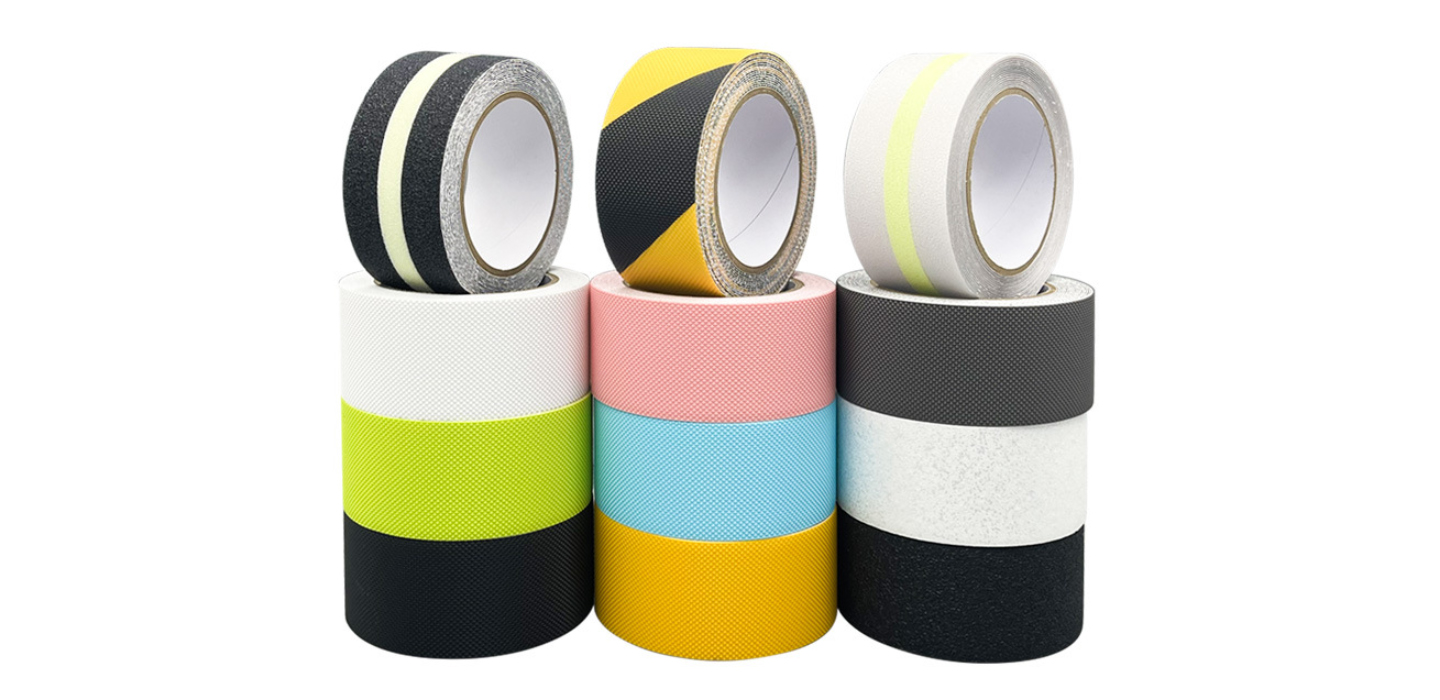
Step 2: Understand the core components
The performance of industrial anti slip tape is determined by its structure and materials.
◉ The backing determines the overall strength, flexibility, and weather resistance of the tape.
• PVC (polyvinyl chloride): the most common, cost-effective, flexible and durable, suitable for most indoor and outdoor environments. The disadvantage is that it may become brittle at low temperatures.
• PET (polyester): More durable than PVC, wear-resistant, tear resistant, and heat-resistant, suitable for high-strength and high demand places.
• Rubber: It has a high coefficient of friction and is extremely durable, suitable for heavy loads and harsh environments.
• Aluminum foil: very durable, corrosion-resistant, suitable for environments with extreme high temperatures or chemical exposure.
• PEVA: Made of soft and environmentally friendly material, it can directly contact the skin and is commonly used in barefoot areas such as bathrooms and swimming pools.
◉ Abrasive Surface - Provides direct friction. Common ones include:
• Aluminum oxide particles: the most commonly used high hardness abrasive with excellent and long-lasting anti slip effect.
• Mineral particles: also provide strong grip and are commonly used in heavy-duty tape.
• Rubber/Dark Texture: Anti slip through textures such as dragon scales and diamond patterns, with a relatively soft texture that does not harm the skin.
◉ Adhesive - determines the firmness of the bond.
• Acrylic: The most common type, with strong adhesion, weather resistance, water resistance, and chemical resistance, widely used.
• Rubber: With high initial viscosity, it is suitable for sticking to uneven or porous surfaces.
• Silicone: Used for special purposes such as high temperature resistance or when non stick surfaces are required.
• Key indicators: You can focus on peel strength (the higher the value, the stronger the viscosity, heavy industry requires ≥ 15 N/cm) and holding time (testing long-term stability).
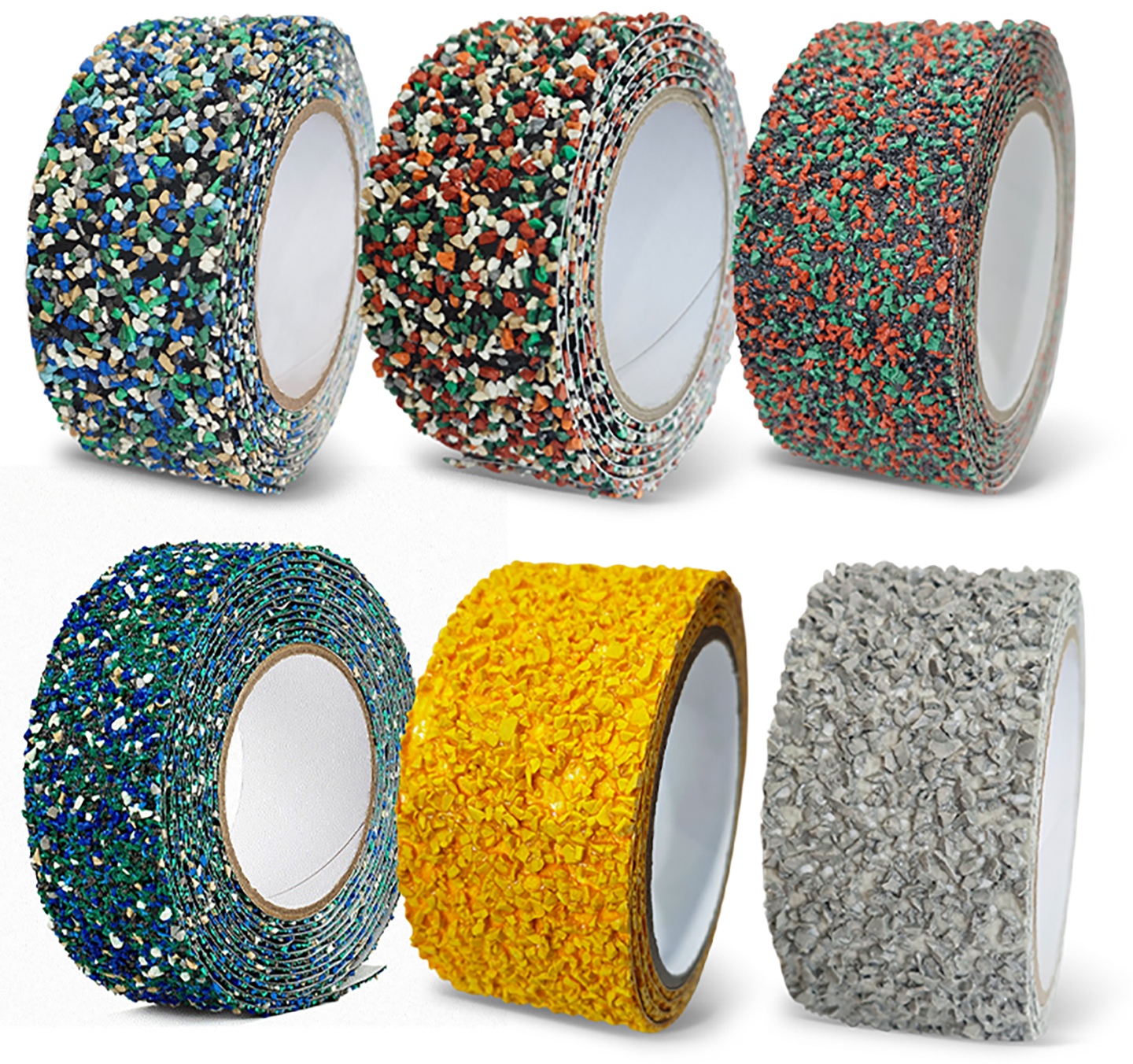
Step 3: Match application scenarios and make key choices
According to your specific needs, match from the following dimensions:
| Key considerations | Selection Recommendations |
| Environment and Intensity | |
| Indoor dry environment | Standard PVC or PET tape is sufficient |
| Damp, oily or outdoor environment | Choose waterproof, oil resistant, and UV resistant products |
| High traffic volume or heavy machinery passage | Heavy Duty tape must be used, as it has coarser abrasives and thicker substrates |
| Extreme temperature | Check the temperature resistance range of the product, such as -10 ° C to+50 ° C or -5 ° C to+80 ° C |
| Function and Safety | |
| Warning of hazardous areas | Choose yellow and black warning tape |
| Dim environment | Fluorescent or light storage tape can improve visibility |
| Maintain a beautiful and inconspicuous appearance | Select transparent tape |
| surface characteristics | |
| Smooth surface (metal, ceramic tile) | Standard acrylic adhesive is usually sufficient |
| Rough or porous surfaces (concrete, wood) | Rubber adhesive or primer may be required for use |
| Anti slip grade | Refer to DIN 51130 standard,and industrial grade anti slip tape can usually reach R13 level (the highest anti slip level) |
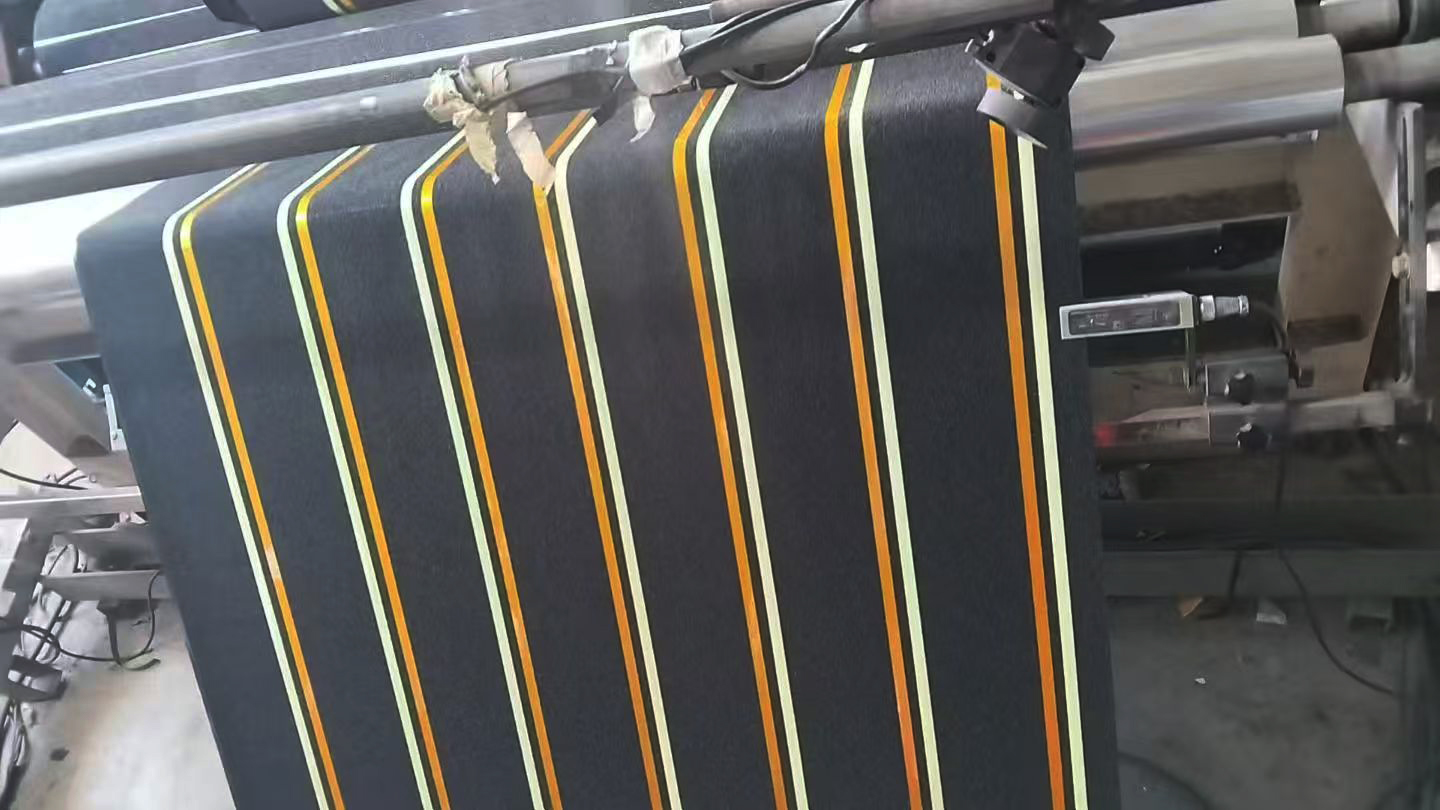
Step 4: Pay attention to performance parameters and brand certification
• Check technical parameters: In addition to the above materials, attention should also be paid to the total thickness, tensile strength, fracture elongation rate, etc., which determine the physical strength of the tape.
• Prioritize certified products: Choose brands that have been certified by independent safety organizations (such as the National Floor Safety Institute (NFSI) in the United States) or meet international safety standards (such as OSHA), as this ensures quality and safety.
• Trust well-known brands: Famous brands such as 3M, tesa, Jerrytape, etc. are usually more reliable in quality control and performance.
Step 5: Proper Construction and Maintenance
• Surface treatment: Ensure that the adhesive surface is dry, clean, free of oil stains and dust. Cleaning agents can be used to clean oil stains.
• Construction temperature: The optimal construction temperature is usually above 10 ℃, and for some products, it is recommended to use 20-30 ℃.
• Pasting technique: When cutting, round the edges to prevent warping. After pasting, use a rubber roller or hammer to compact and eliminate bubbles. The adhesive strength usually reaches its optimum after 72 hours.
• Regular inspection: Regularly check whether the edge of the tape is raised or worn, replace it in a timely manner, and ensure safety.
Choosing industrial anti slip tape is essentially choosing a precise risk solution for your work environment. Starting from a clear requirement and gradually matching the most suitable product is the most effective way to ensure safety.
What specific scenario are you planning to use it in? For example, on the factory floor, stairs, or equipment? If it's convenient for you to tell me the specific surface material and environmental conditions, as a professional anti slip tape manufacturer, Jerrytape can help you make more specific recommendations.